Opinion
DOWNSTREAM VIEW
What a ‘paused gift’ actually pauses




 Add EJP on Google
Philanthropy likes to imagine itself above politics. In practice, it is just as susceptible to bias, emotion and geopolitical currents as any other form of discretionary spending — and donors today are increasingly making decisions that blur the line between supporting humanity and endorsing policy.
Full disclosure: I represent an Israel-based university. It is not a political body. It exists to educate, advance research and to create opportunities for students and scholars regardless of nationality, religion or politics.

Adobe Stock
Recently, I reached out to a philanthropic advisor who counsels high-net-worth individuals. My appeal was straightforward: among a diverse client base, surely there are those interested in high-impact investments in education and research. The response I received was candid — and eye-opening.
She explained that many of his clients are not aligned with Israel’s current foreign policy, particularly regarding Gaza, and that this misalignment affects their willingness to support Israeli institutions. She added that even among her Jewish and Israeli contacts, there is disagreement with current leadership, and suggested that a shift in policy — or leadership — would likely lead to greater philanthropic support for the university.
I appreciated and respected her honesty. These are not unreasonable concerns, and they are not unique to her clients. They surface in conversations I have had with thoughtful, principled donors who have given generously for years and now find themselves uncertain. Their discomfort is real, and it deserves to be taken seriously rather than argued away.
But it also deserves to be examined.
The question underneath these conversations is not whether donors are entitled to their views — they are — but whether withholding support from a university is the instrument that actually expresses those views. And on that question, I think that the honest answer is no.
Universities do not and should not dictate foreign policy. An Israeli university has no more influence over national leadership than a Canadian or American university has over its own government’s international stance; nor should it. What universities offer is something more modest and yet much more profound: open inquiry, collaboration across borders and the pursuit of solutions to problems that do not recognize geopolitical boundaries. Universities are places where minds meet, where ideas are tested and where breakthroughs emerge that change lives far beyond any one nation.
Philanthropy, at its best, understands this distinction. It recognizes that funding a university is not an endorsement of a government, but an investment in humanity’s shared future — a commitment to education, discovery, and to the belief that knowledge can outlast conflict.
And yet, increasingly, that distinction is collapsing. Since Oct. 7, 2023, and the war that has followed, geopolitical pressure has begun to seep into spaces that were once insulated from it — campuses, advisory rooms, funding decisions — where the line between policy and institution is being redrawn in real time.
This is where the cost becomes real, and where it is worth being specific. Because when support is withheld from a university, what is actually paused is not policy. It is people, programs and possibilities.
Consider what that looks like in practice:
It is the scholarship that allows a Druze student to pursue her dream of becoming a physician. It is the research grant that leads to breakthroughs in retinal transplants, restoring sight to children across the globe, regardless of religion or nationality. It is the investigation into rare diseases that not only saves individual lives but transforms entire families and communities.
None of these outcomes are political. None of them hinge on who holds office or what decisions are made in a cabinet room or a leader’s office. They are the quiet, persistent work of people committed to making life better — work that continues across election cycles, across changes in government, across the rise and fall of the very policies donors are reacting to today.
That last point matters. The time frames do not match. Foreign policy decisions are measured in news cycles and election cycles. The work of a university is measured in decades — the years it takes to train a physician, the longer arc required to move a discovery from a laboratory bench to a patient’s bedside, the generational return on educating a student who goes on to teach, build, heal and lead. Pausing support in response to a moment in geopolitics interrupts work whose value will only be visible long after the moment has passed.
Donors have every right to their views, and advisors are right to honor them. But there is a difference between acknowledging a client’s concerns and allowing those concerns to foreclose meaningful, nonpolitical impact. Philanthropy has always required a certain discipline: the ability to see beyond the immediate, to separate signal from noise and to invest in what endures.
We often say we should not throw out the baby with the bathwater. In today’s philanthropic landscape, that warning feels less like a cliché and more like a diagnosis. When discomfort — however understandable — leads to the withdrawal of support from institutions that educate, heal, and innovate; the result is not a statement about policy. It is a narrowing of the pathways through which progress happens.
Philanthropists have a unique capacity to rise above this. Their influence is not limited to writing checks; it lies in shaping what is possible over time.
The ask is not to fund politics. It is not to endorse foreign policy. It is far simpler, and far more consequential: to recognize that within universities are the tools to change how we understand, treat and improve life itself — and that those tools are built slowly, through sustained commitment, and lost quickly when that commitment is paused.
That is not a partisan act. It is a human one.
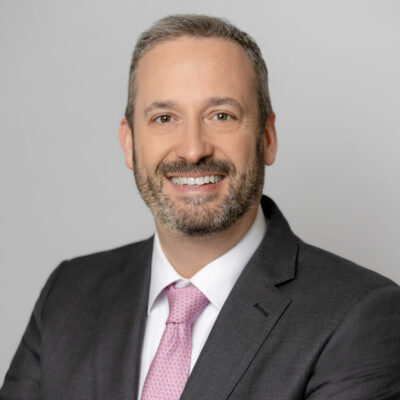
Randy Spiegel is the CEO of Canadian Friends of Bar-Ilan University. He is a career Jewish communal service professional, human services manager and certified fundraising executive.