Opinion
LESSONS IN LEADERSHIP
Turning crisis into care: A Korczak-inspired approach to Jewish youth education




 Add EJP on Google
As the war between Israel and Iran was heating up, I scrolled by a tweet by the Mumbai-based political commentator and blogger Maitreya Bhakal: “People need to stop saying that Iran is targeting civilians in Israel. There are no civilians in Israel.” Twenty-two thousand people liked his idea. My mind went immediately to the children who had been injured by Iranian missiles. No civilians? Honestly, this made my blood boil.
For all of us who know and love Israelis and have felt concern about their safety over the last few months, this type of tweet, which claims that all people are legitimate targets in war, is dangerous, frustrating and, sadly, becoming more common. Applying this type of thinking is wrong against Israel, against Iran, against Gazans or anyone else for that matter. Have we not learned from history? Are we really at the point when children are no longer innocent?
Wikimedia Commons
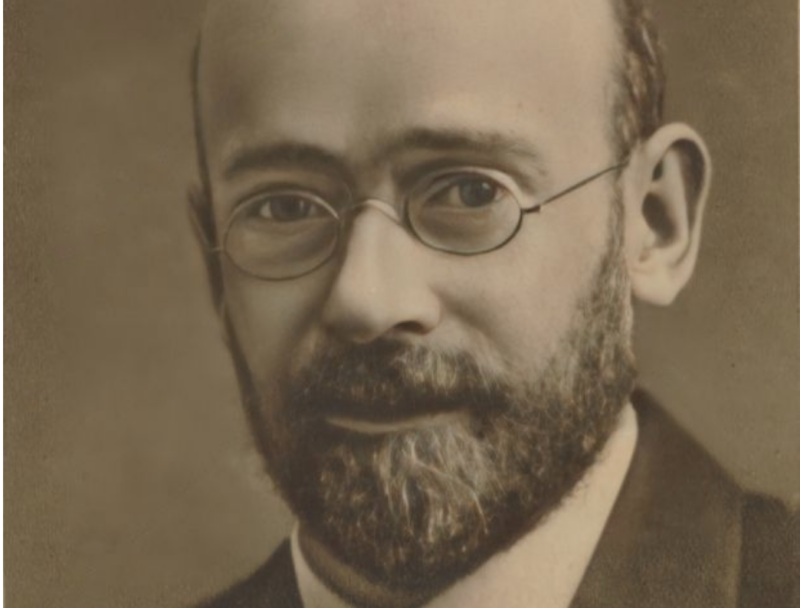
Dr. Janus Korczak in 1933.
I am a Jewish educator who does a lot of work with Jewish teens, particularly with teens who work as teachers or counselors for younger children. One source of great inspiration for me is the life and work of Dr. Janus Korczak.
In my teen years, during my first visit to Yad Vashem in Jerusalem, our guide told us about the Jewish orphanage in the Warsaw Ghetto and Korczak, its director, who accompanied his young charges to Treblinka. It was a powerful story. It was powerful because we were a group of teens having the time of our lives, and they were a group of orphans, many of them teens, who had been through tragedy — now about to be murdered by fascists.
The fact that Korczak accompanied them to their death was also a powerful act of both courage and martyrdom. The spiritual message of the story, as I understood it, was that in extreme circumstances, an educator must not abandon the children for whom they are responsible. It was akin to the maritime tradition of “The captain goes down with the ship.” And it was one story that helped me wrap my teen head around the horror that even as over a million Jewish children were murdered during the Shoah, at least one teacher cared enough to be present as a witness.
As an adult, I rediscovered Korczak when I heard someone reference one of his famous teachings:
“Children are not the people of tomorrow, but people today. They are entitled to be taken seriously. They have a right to be treated by adults with tenderness and respect, as equals.”
This quote resonated with me because it captured what I saw as a deeply humanistic and spiritual approach to education, and a perspective that counters the oft-cited idea that I hear from so many educators and psychologists that teenage brains “aren’t fully formed.” Korczak argued that we have to start with the premise that children are as complex as we are. I didn’t truly understand this quote until I began reading more about Korczak’s life and his work on behalf of children.
It turns out that Korczak initially had an idyllic childhood. His father was a prominent lawyer, and his family lived in a luxurious apartment in a nice neighborhood in Warsaw. But, when Korzack was 11 years old, his father struggled with mental illness and was taken to a psychiatric hospital. This left Korczak’s mother in difficult financial circumstances, and it pushed young Korzack to take on work tutoring other students. His father ultimately died while he was still a teenager.
After studying medicine at the University of Warsaw, Korczak became a military doctor and then a pediatrician. As a pediatrician, he treated many children who had been victims of horrifying abuse, mainly by parents or teachers. Then World War I arrived, thrusting Korczak back into military service.
In the wake of the war, there was a growing international awareness of the millions of children who were suffering as a result of the war and the economic devastation it had caused. British social reformer Englantyne Jebb, a child rights advocate, popularized the phrase “There is no such thing as an enemy child,” and Korczak, influenced by her and others, began to write about children’s rights and started to educate parents and teachers. Over the next few decades, Korczak wrote children’s books, hosted a radio show for parents and tried his best to help people to understand that a child has the right to “be what it wants to be.”
These days, as I travel around the country leading training workshops for the many teenagers who work in their local synagogues as teaching assistants, I tell them about Korczak and share with them two of my favorite teachings from among the many gems he wrote down.
The first teaching is about the disposition that we should cultivate as educators. It is:
“The caregiver who frees rather than forces, lifts rather than drags, shapes rather than pinches, teaches rather than dictates, asks rather than demands, will experience many inspired moments with a child.”
Teens who read this quote often share stories about teachers who didn’t heed this wisdom, and they generally comment that they appreciate the line “asks rather than demands” as a critical part of teaching.
But it is the second teaching from Korczak that I think speaks the most to this moment. Korczak wrote:
“A child has the right for their sadness to be respected, even if it is only about a pebble that has been lost.”
Even over a pebble. Even if the sadness is something that we see as insignificant, small, or common. This is what we need to keep in mind as we educate children — to respect their sadness. This resonates deeply with teenagers, who learn from this quote about the importance of respecting children’s emotions and creating a sense of psychological safety in the classroom.
In the most recent Anti-Defamation League survey of parents of Jewish children, conducted in 2024, over 70% reported that their child had experienced antisemitism in school. For young people, who are acutely aware of social hierarchies, pecking orders and cliques, an antisemitic comment, slur, or joke can have a lasting impact on their emotional health. It can make them want to distance themselves from the Jewish people, spiral into self-doubt, or feel worthless. Korczak’s sensitivity to children’s self-esteem is now confirmed by neuroscience, which has shown that loss and social rejection activate the anterior insula and the anterior cingulate cortex — the same neural regions as physical pain.
Korczak’s teachings on empathy also remind me to have empathy for myself. The pebble I lose again and again is my faith in humanity. I lose it every time I read a moronic and hateful tweet or read a news story of innocent civilians caught in the crossfire in the Middle East. What can I do? I can’t stop armies from fighting, and I can’t stop people from being haters. But I can respect my own sadness, be a witness to it and pray that we can live to see the day when we collectively learn to “free rather than force.”
Rabbi Daniel Brenner serves as the vice president of education for Moving Traditions. He is currently writing a book about parent-child relationships and, in his spare time, he studies and teaches shtetl dance. He is also a contributor to the Spiritual Innovation Blog of the Clergy Leadership Incubator, directed by Rabbi Sid Schwarz.