Opinion
GOOD MEDICINE
Resilience in practice: Why hospitals are key to northern Israel’s renewal




 Add EJP on Google
In Short
As the past two-plus years of war show, medical centers provide critical services for surrounding communities and can also act as engines for economic growth
In an almost unimaginable year of war, uncertainty and disruption, something extraordinary happened in Israel’s north: a major rehabilitation center was established, opened and began operating.
While rockets fell, communities were evacuated and medical teams worked under constant strain, professionals across disciplines mobilized with a shared sense of purpose. Physicians, nurses, therapists, administrators, government partners and philanthropic supporters all stepped forward. The result was not merely continuity, but growth. This is what resilience looks like in practice.
Courtesy/Massad Oz Management and Engineering
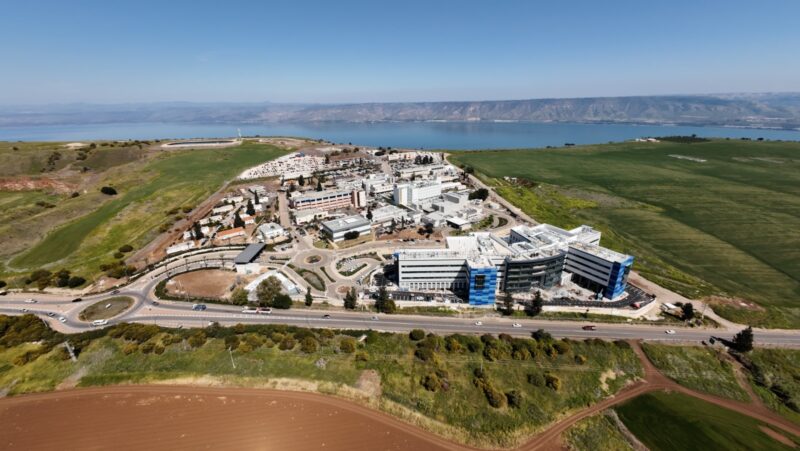
An aerial view of Tzafon Medical Center in Poriya, northern Israel
Resilience is often discussed in abstract terms, especially in the context of national security. But in the north of Israel, resilience is deeply practical. It is the ability of families to return home, of children to receive care close to their communities, of older adults to rehabilitate near their support networks and of professionals to build meaningful careers without leaving the region. Health systems — particularly hospitals — are central to this broader rehabilitation of the north.
During the Iron Swords War, Israel’s public health system in the north proved to be one of the most stable and reliable anchors of civilian life. Hospitals and community clinics continued operating at full intensity, even as staff members were called up for reserve duty and cared for their own displaced families. They treated routine civilian needs alongside war-related trauma and the complex medical consequences of prolonged evacuation. This uninterrupted presence sent a powerful message: life in the north is viable, even under fire.
One highly visible example of this momentum is the establishment of the Helmsley Rehabilitation Center at the Tzafon Medical Center in Poriya, south of Tiberias. Accelerated during the war, the center brought advanced rehabilitation services — physical, neurological and pediatric — to the north on a scale that had not previously existed. For patients and families, this meant receiving high-quality care close to home rather than traveling long distances at moments of profound vulnerability. For the region, it marked a turning point: a declaration that excellence belongs in the periphery, not only at the center. At the same time, this achievement represents just one facet of a much broader and more comprehensive institutional transformation.
Importantly, this progress was not accidental, and it was not limited to rehabilitation alone. During this same period, Tzafon Medical Center expanded a wide range of clinical services and established the AIR Division — academia, innovation and research — designed to serve as a long-term growth engine for the region. AIR connects clinical care with academic excellence, medical innovation, and advanced research infrastructure, positioning the hospital as a regional hub that attracts leading physicians, researchers and partners. Together, these developments reflect strategic investment in the hospital’s overall capacity: strengthening everyday medical services for the region’s population while building the foundations for future excellence. In northern Israel — where Jews, Muslims, Christians, Druze, Circassians, religious and secular communities live side by side — hospitals remain one of the rare shared civic spaces grounded in professionalism, trust, and equality.
Looking ahead, resilience must be understood as a system-wide process, not a single project. While post-war physical rehabilitation understandably captures public and philanthropic attention, the long-term needs of the north lie in ensuring broad access to high-quality medical services across disciplines, from diagnostics and internal medicine to mental health, pediatrics and chronic care. Continued investment is needed in mental-health services, advanced clinical specialties, and medical education pipelines that train and retain professionals locally. The goal is not merely to address disparities, important as that may be, but to build a medical center of excellence that anchors the north as a region of opportunity, growth, and confidence.
If Israel seeks a strong, stable north, the path forward is clear. Regional rehabilitation requires institutions that people trust, rely on, and choose to build their lives around. The public health system has already demonstrated its capacity to lead under the most difficult conditions. With strategic vision and sustained philanthropic partnership, it can continue to serve as one of the most powerful engines of recovery and resilience for northern Israel.
Tamar Bodek Mala is CEO of the Friends of Tzafon Medical Center Association