Opinion
ADVOCACY OPPORTUNITY
Jewish education is too important to sit this one out




 Add EJP on Google
Jewish school affordability remains one of the most constant and emotional conversations in our community. We hear it from parents every day — around Shabbat tables, in carpools and at school events. Tuition is often a family’s largest expense, shaping where they live, how they plan and what opportunities they can provide. As school leaders, we see these pressures up close, and we know our responsibility is not only to educate but to make that education accessible.
In recent months, many have heard about a significant new federal development related to nonpublic schools and scholarship support. The news is spreading quickly because it has direct implications for Jewish school affordability. What many may not realize, however, is that this is not simply a program to monitor — it is a program that invites action. Our community now has a real opportunity to help shape how this initiative will serve Jewish students and schools.
File photo
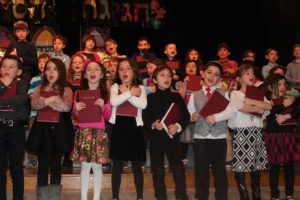
Illustrative. Children at a siddur ceremony sing as they hold their first prayerbooks.
For the first time, the federal government has created a scholarship tax credit program that allows individual donors to receive a credit of up to $1,700 on their federal income tax when contributing to qualified “scholarship granting organizations.” These organizations distribute scholarships for tuition, tutoring, educational materials, technology, transportation, special needs services and other essential support for students in kindergarten through 12th grade.
For Jewish day schools, this is far more than a technical change: It is a potential lifeline for thousands of families already stretched by the cost of Jewish education.
What makes this moment even more critical is that the federal government is actively requesting public input. The Treasury Department and the Internal Revenue Service have formally asked families, educators, donors and community institutions to comment on how the program should be designed. Regulators are seeking guidance on which scholarship granting organizations should qualify, how states should oversee them, how multi-state organizations should function, what documentation should be required and how scholarship funds should be used. They have made clear they want community voices to help shape the outcome.
As heads of Jewish day schools across the country, we are working closely with Teach Coalition, a national organization advocating for Jewish schools in government. Teach Coalition is preparing detailed policy recommendations, coordinating legal, financial and educational experts and ensuring that federal regulators understand the realities and needs of Jewish schools. Through this partnership, our community is positioned not only to recognize the opportunity but to influence it meaningfully.
If implemented well, this program can expand access to Jewish education, strengthen enrollment and make tuition more affordable for all families. It can help ensure that every child who seeks a Jewish education has a realistic path to receive one. For us, this is not simply a policy goal but a reflection of our core belief that every Jewish child deserves a place where their identity is nurtured and their sense of belonging is strengthened.
But this outcome is not automatic. It requires coordinated engagement across the Jewish community. Without broad participation, the final regulations may not reflect our needs or the operational realities of our schools.
We encourage Jewish families, donors, federations and communal leaders to join this effort. Submit comments to the Treasury Department and the IRS. Support state participation. Share information widely. The federal government has opened the door for involvement, and our community must walk through it. To get involved and make our voices heard, reach out to the Teach Coalition before the Treasury Department’s Dec. 26 deadline.
Jewish education is central to our identity, our resilience and our future. This federal program presents a historic opportunity to strengthen that mission in a lasting way. Now is the moment for our community to raise its voice and help shape a program that can support Jewish life for generations to come.
Rabbi Daniel Alter is the head of school at The Moriah School in Englewood, N.J.
Rabbi Ari Ginian is the executive director of Yeshiva Katana Long Island.
Rabbi Mordechai Schwersenski is the head of school at Katz Hillel Day School of Boca Raton, Fla.