Opinion
READER RESPONDS
A Jewish education for all our children




 Add EJP on Google
Sarah was thrilled for her daughter, Emma, to start preschool at their local synagogue. Her in-laws had been members for decades, and she was proud to finally step into the familiar ritual of dropping off an impossibly-small child with an impossibly-big backpack in the halls of their Jewish home away from home.
But within weeks, concerns emerged. Emma struggled to sit during circle time. She didn’t always respond when asked to clean up or come inside from the playground. She was known to throw toys in frustration. Her behavior was labeled “defiant,” and the director described her as rude and disregarding of peers and adults. The family was told to seek a psychiatric evaluation.
Sarah was stunned. At home, Emma was energetic and joyful, a kid who sometimes misjudged how her body movements impacted others, but had no malice in her body. Nothing about her felt like a child with “deep psychological issues.” Yet the school insisted.
The evaluation revealed nothing. Emma’s behavior continued. And by the end of the year, the family was told that Emma needed a new school. Sarah and her husband are devastated not only by needing a new school for Emma but they felt as if they were being asked to leave their community, their Jewish home.
This scene plays out far too often. Sarah, whose name was changed for privacy, is one of the many parents I interviewed for my upcoming book, Raising the Whole Tribe: Jewish Families, Neurodivergence, and the Search for Acceptance.
According to Matan’s new study, “Closing the Inclusion Gap,” 20-25% of Jews have disabilities, mirroring the broader population (“New study shows Jewish groups lagging behind secular community on disability inclusion,” eJewishPhilanthropy, Dec. 3). However, fewer than one-third of Jewish schools employ a learning specialist. That gap leaves parents and children vulnerable to misinterpretation, mislabeling and, in too many cases, exclusion.
It doesn’t have to be this way.
Imagine if, instead of pushing families out, schools were equipped to bring services in. If teachers could collaborate with a learning specialist, share observations, recommend appropriate assessments and support the implementation of strategies within the classroom. This is standard practice in many public settings. Jewish families should not get less support in Jewish spaces.
Yes, sometimes a school just isn’t the right fit. As both an educator and the parent of two children with disabilities, I’ve lived on both sides of that conversation. The hardest truth I’ve learned is also the most essential one: parents can hear a lot if we first know that you see our child. Really see them — their strengths, their quirks, their superpowers. We can face difficult decisions when we trust that the adults around our children value them, too.
What if Jewish families weren’t “asked to leave” or “invited to find another place,” but instead guided within the Jewish community? What if schools coordinated their expertise — one specializing in dyslexia, another in intellectual disabilities, another in autism — so that every child had a pathway to belonging? We talk endlessly about Jewish continuity. But continuity requires communities that can hold all of our children, not just the easy ones.
And as for Emma? Months after her psychological testing, she was finally diagnosed with severe hearing loss. Her “defiance” was the frustration of a child who couldn’t hear directions in a noisy classroom. A trained early-childhood educator would have known to ask for a hearing assessment before recommending a psychiatrist.
Emma’s story isn’t an outlier. It’s a warning — and an opportunity. Our Jewish institutions can choose to be places of exclusion or places of belonging. The path we choose will determine not only the future of our schools, but the future of our community.
Now is the time to build the inclusive Jewish world our children already deserve.
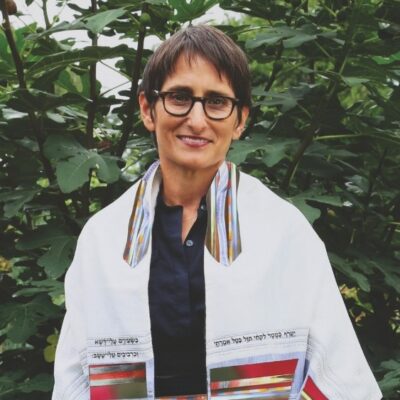
Rachel Lerner is a Jewish educator and philanthropic advisor and the former dean of the School for Jewish Education and Leadership at American Jewish University in Los Angeles. Her book, Raising the Whole Tribe: Jewish Families, Neurodivergence, and the Search for Acceptance, is forthcoming.