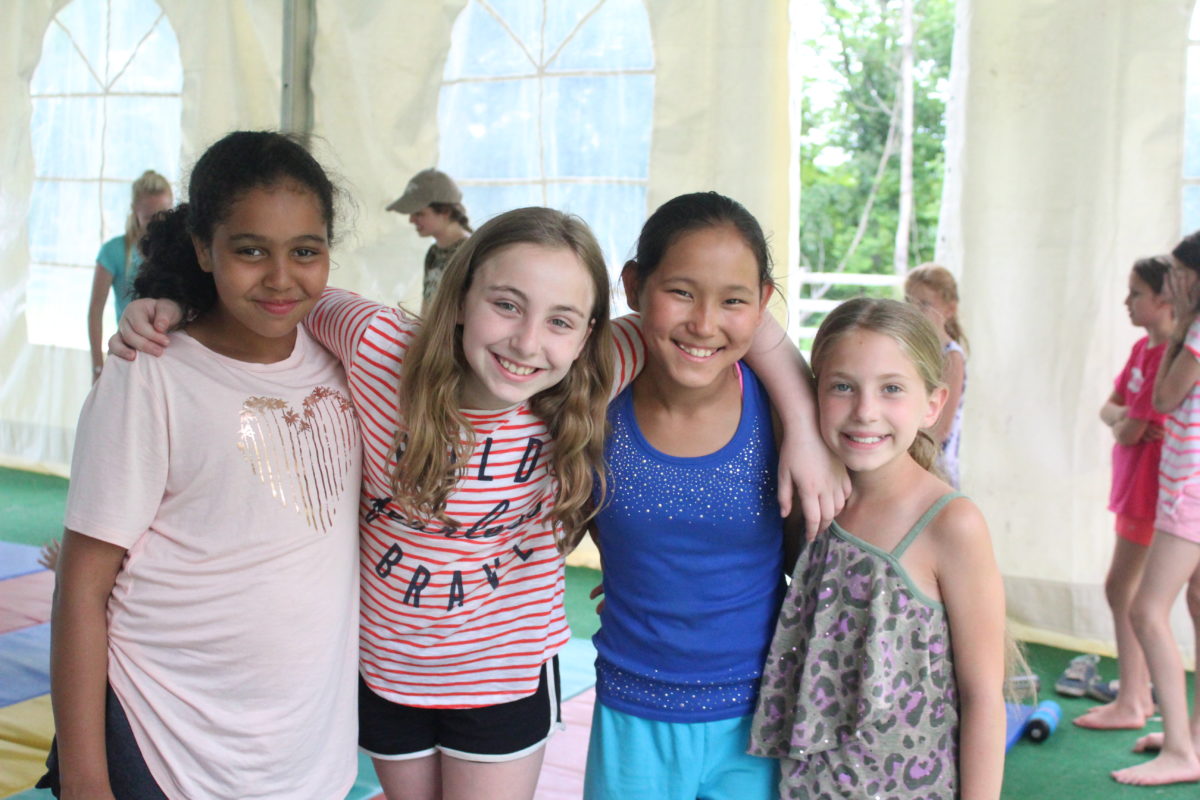
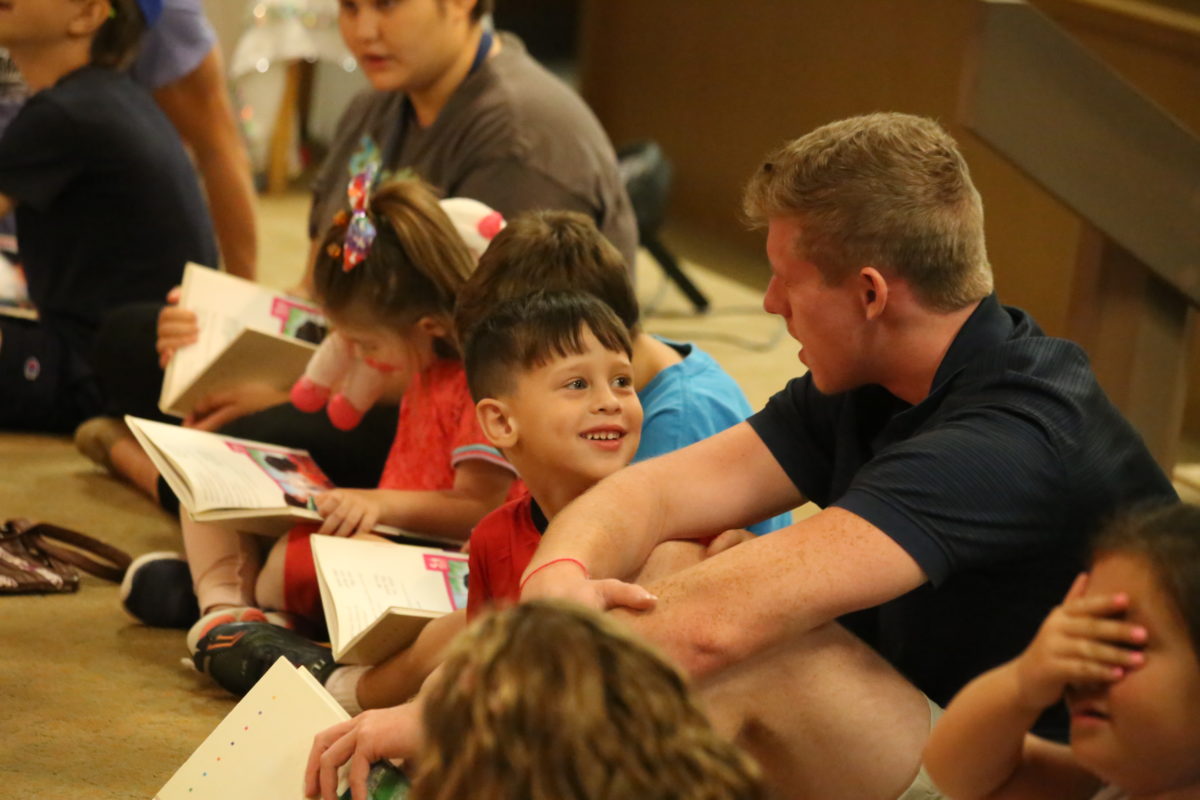
by Ramie Arian “That felt a lot like camp!” said the woman next to me at the conclusion of the Friday evening service during the recent Biennial of the Union for Reform Judaism (URJ). Judging from her tone, she approved. Indeed, it had felt “a lot like camp,” I thought, though on first reflection, it was not quite clear why. Tefillah (worship) at camp is generally a relatively casual affair: with worshippers dressed in shorts or jeans, prayers offered by leaders - probably campers and counselors - who are lacking in formal skills, leading a congregation of up to a few hundred participants, mostly children. The music of the service is guided by songleaders who make up in enthusiasm for what they lack in training and polish. Often, the tefillah takes place in an outdoor setting of … Continue Reading
End the Polemics and Restore Dialogue to the Jewish Community
by Avi Herring Over the past several decades, two of the pillars of American Jewish communal consensus - fighting anti-Semitism and supporting Israel unconditionally - have crumbled. But instead of exploring why our consensus has fallen apart and working together to find new areas of agreement, we often hurl offensive polemics against one another. What little structured Jewish communal conversation that exists is descending into dysfunction. There are many reasons why the communal consensus has broken down. First, most American Jews do not experience anti-Semitism or, if they do, it is an insignificant part of their lives. Second, Israel’s presence in the West Bank and the increasingly anti-liberal laws coming out of its parliament are alienating some American Jews, who have built their … Continue Reading
Was 2011 the Tipping Point for “Public Space Judaism”?
by Rabbi Kerry Olitzky Ten years ago, the Jewish Outreach Institute (JOI) released a landmark survey of participants in engagement programs, which clarified many of the best practices that are still of paramount relevancy today to any Jewish communal professional interested in reaching less-engaged Jews and unaffiliated intermarried households. One of those findings now seems obvious, but was not at the time: that Jewish programs held in secular venues attract a less-affiliated crowd than the same programs held inside the four walls of Jewish institutions. We believe this past year was a tipping point for the key outreach method of taking Jewish life out to where people are rather than waiting for them to come to us. In that 2001 study, JOI coined the term “Public Space Judaism” to … Continue Reading
Framing the Training for Our Emerging Jewish Experiential Educators
by Mark S. Young As we begin 2012, I predict that experiential education in the Jewish world will continue to be a hot topic. Last month, I attended the Union for Reform Judaism’s Biennial where Jon Woocher, Chief Ideas Officer at JESNA (I love his title), continued to press the importance of creating “immersive and meaningful experiences” within Jewish education to be successful in transmitting Jewish knowledge and engaging the next generation in Jewish life. Given this, we must not only address the question of what makes for excellent Jewish experiential education. Perhaps more important, how do we know a great Jewish experiential educator when we see one and how do we train these future educators for success? To substantiate definitive answers is a daunting task, primarily since the … Continue Reading
Bucking the Trends: Teens Call for Collaboration and a Place at the Table
by Jacob Sorrells For those of us who are deeply involved in the Jewish community, it seems at times that the issues and challenges we face are insurmountable. We make it our business to study the trends of engagement in Jewish life, and we commit ourselves to doing whatever it takes to continue building a bright future for the Jewish people. For me, the most striking and potentially threatening of all such trends is the fact that over 80% of Jewish teens have no relationship with a synagogue by the 12th grade and boys are disengaging at an even more alarming rate. But last month, when I attended the Union for Reform Judaism’s Biennial in Washington, DC, I found it hard to focus on any negative statistics. I was sitting in a room surrounded by 5,000 fellow Jewish leaders from around the world … Continue Reading
“Takeaways” from WRJ’s Assembly and URJ’s Biennial: Women and Youth Lead the Way
by Robert I. Evans and Avrum D. Lapin In our recent posting about the just concluded 2011 Biennial of the Reform Movement, we lovingly chided the Union for Reform Judaism’s successful conference for focusing inadequately on preparing its leaders and constituents for the challenges of not just understanding philanthropy, but doing it. That is not to say that charitable giving is not happening, but philanthropy should be happening more and be more central to the ongoing functioning and vision for the Movement and its components. Amidst a dynamic conference where “batteries were recharged” and Jewish spiritual energy renewed and replenished, we note two national efforts which, we are certain, are the harbingers of the future. We witnessed the first at the exciting Assembly of the Women … Continue Reading
Reflecting on URJ’s Biennial: Where Is Encouraging Philanthropy?
by Robert I. Evans and Avrum D. Lapin The largest Jewish gathering in America - the Biennial of the Reform Movement - took place last week near Washington, D.C., attracting more than 5,000 committed Jews affiliated with 500 Reform congregations across the United States and Canada. Without any doubt, this was a memorable, electrifying event that will be talked about for weeks, months ... or maybe even years ahead. With President Barack Obama headlining a major session, the Biennial excited and re-charged so many congregational leaders and set a hopeful and confident tone for the Reform Movement. Rabbi Rick Jacobs received a warm embrace as the incoming president of the Union for Reform Judaism (URJ), succeeding Rabbi Eric Yoffie, who has held the post for the past 16 years. Reflecting on the … Continue Reading
Isaac Mayer Wise Academy and URJ Camp Establish Eco-Village
The Union for Reform Judaism's (URJ) Greene Family Camp (GFC) announced the establishment of the Isaac Mayer Wise Academy Eco-Village at GFC in Bruceville, Texas. Through the Eco-Village, some of which will be complete by next summer, campers will produce their own food, build their own communities, and explore the natural world in a more in-depth way. For many city-dwelling campers, this will be a transformative experience. It will be a place where older campers can learn about and experience the natural world while teaching younger campers to appreciate it. Every camper and staff member will be involved. Plans for the Eco-Village include a new horseback riding program and campers of all ages will also have the opportunity to learn about archeology, geology and navigation while riding through … Continue Reading
Foundation for Jewish Camp Receives Grant for Pilot Jewish Educator Program
The Foundation for Jewish Camp has received a $3.3 million grant from the Jim Joseph Foundation and AVI CHAI Foundation for a pilot initiative that will create senior experiential Jewish educator positions to be shared by nonprofit Jewish overnight camps and Jewish day or synagogue schools. This groundbreaking program, Nadiv, has several goals. The first is to experiment with a new model that could enhance the quality of education at Jewish camps in a sustainable way. The second objective is to create a new model for year-round positions for trained and talented Jewish educators and the third is to model a new way to foster deeper collaboration between different kinds of institutions in the Jewish educational world. Developed in partnership with the Union for Reform Judaism (URJ), Nadiv will … Continue Reading
Rabbi Richard Jacobs Slated as New URJ President
The Union for Reform Judaism (URJ) announced today the recommendation of Rabbi Richard Jacobs for President of the organization, to succeed Rabbi Eric H. Yoffie, who will retire in 2012 after 16 years in the position. If formally selected, Rabbi Jacobs, who has been the senior rabbi at one of the most vibrant congregations in North America for 20 years, will be only the fourth president of the URJ in the last 68 years. The board of trustees will vote on Jacobs' nomination at its June 2011 meeting. At the completion of the process, Jacobs will begin to consult with Reform congregational and community leaders before he assumes his role as president in 2012. Jacobs has been the senior rabbi of Westchester Reform Temple (WRT) in Scarsdale, New York, since 1991. His tenure has been marked by … Continue Reading