WHAT YOU SHOULD KNOW
Want Jewish continuity? Put Jews together in a room (or a camp or a basketball court or a tour bus)




 Add EJP on Google
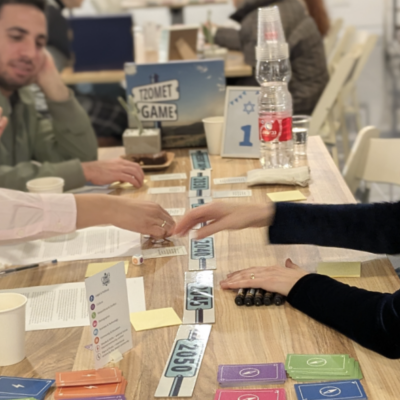
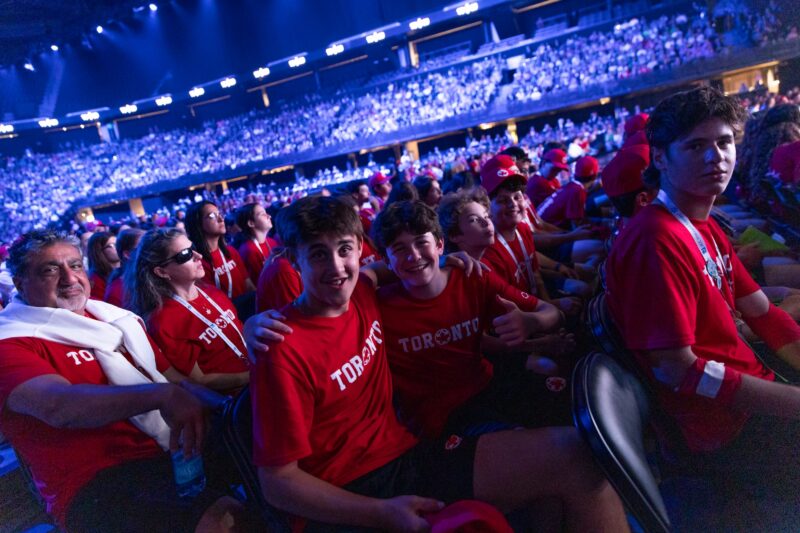
Face time isn’t just an app on your phone — it’s a recipe for forging Jewish identity. Each in its own way, the news stories and opinion pieces making up today’s edition of Your Daily Phil demonstrate a profound, if somewhat banal, truth about the creation and reinforcement of Jewish identity: There is no substitute for significant in-person experiences.
Lost in the shuffle in the debates about social media campaigns, the fights about effective messaging, the rise of artificial intelligence and internal ideological squabbles is the simple fact that study after study has shown that the more time that Jews spend with other Jews, the deeper their connection to their Jewish identity and the Jewish People will be.
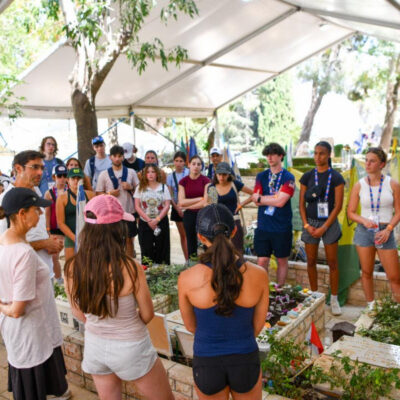
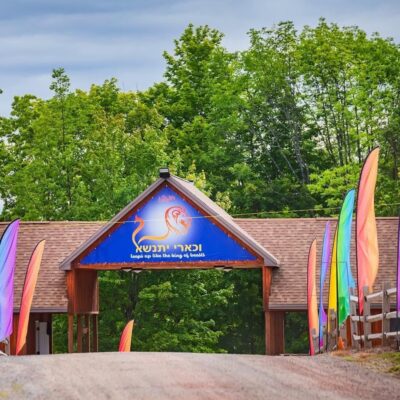
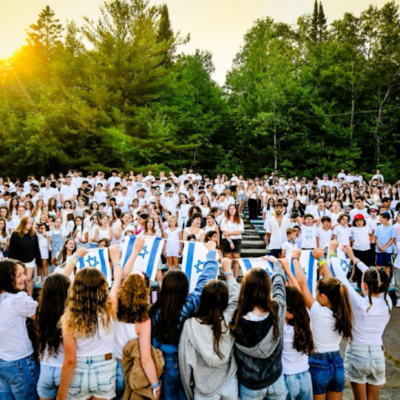
This is clearest with Jewish day schools — it’s hard to beat roughly seven hours a day, five days a week, for 13 years. But, as the articles below argue, things like sports, Israel travel and summer camps can do some heavy lifting as well.
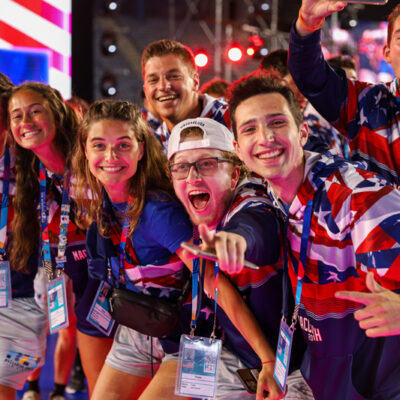
What several of the pieces share in common is that they also represent initiatives that solve a problem or take advantage of an existing opportunity. Jewish parents have to find a way to occupy their kids for the summer. Many Jewish teens want to play sports. Athletes participating in the Maccabiah Games have already flown to Israel. So let’s send them to Jewish summer camp; have them compete against other Jewish teens in Maccabi Games; and take them around and teach them about Israel and its people, instead of just competing.
In her opinion piece, Keren R. McGinity argues for ensuring that the people who will be spending the most time with Jewish children — their parents — are equally capable of imparting Jewish identity. (For McGinity, whose focus is on interfaith families, this means empowering Jewish dads in mixed-religion couples to play a more active role in parenting.)
Though in a markedly different way, even the meeting between New York City rabbis and Mayor Zohran Mamdani demonstrates the importance of in-person experiences, not for the meeting itself, but as it relates to how Mamdani was elected in the first place. A recent New York Times piece examined this year’s run of electoral victories by Mamdani and other candidates associated with the Democratic Socialists of America, finding that a key element of their campaigns was their ground game, allowing them to outflank better-known and better-funded opponents.
In generations past, American Jews felt obligated to be involved in Jewish communal life — for positive reasons and, in some cases, because antisemitism kept Jews out of other spaces — and while this still exists to a certain extent, it is easier than ever for American Jews to disaffiliate entirely.
From 2013 to 2020, the Pew Research Center study of American Jews found that the share of Jews “of no religion,” who have “low levels of religious participation… comparatively weak attachments to Israel, feelings of belonging to the Jewish people and engagement in communal Jewish life” grew from 22% to 27%.
As we are in the dog days of summer, camp, sports and Israel travel are highlighted in today’s edition, but they are far from the only method of significant in-person experiences. After-school programs, early childhood education and youth groups also have critical roles to play.
If Jewish funders and the organizations they support care about Jewish continuity, their focus must be on engagement — going out there and getting more Jews into more rooms with more Jews.