WHAT YOU SHOULD KNOW
Large foundations bristle at growing White House threats to crack down on progressive philanthropy
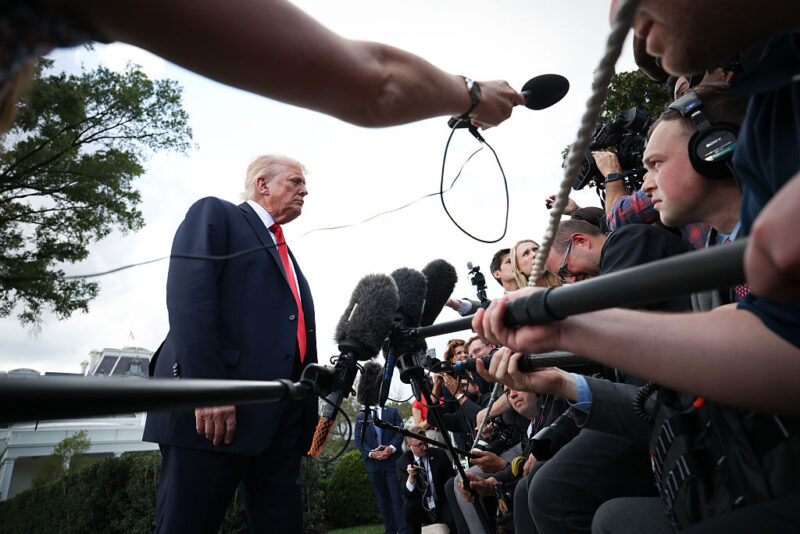
WASHINGTON, DC - SEPTEMBER 11: U.S. President Donald Trump takes questions from members of the press on slain conservative activist Charlie Kirk while departing the White House on September 11, 2025 in Washington, DC. Trump is scheduled to travel to New York City this evening. (Photo by Win McNamee/Getty Images)




 Add EJP on Google
Large philanthropic foundations, particularly those on the political left, are growing increasingly concerned about what they see as an effort by the Trump administration to crack down on their operations in the wake of last week’s assassination of conservative activist Charlie Kirk and other recent acts of political violence.
More than 150 foundations, more than 10% of them run or founded by American Jews, released an open letter yesterday warning against “attempts to exploit” these recent attacks. Signatories include Ford Foundation, Knight Foundation, Tides, Open Society Foundations and Rockefeller Brothers Fund, as well as the Charles and Lynn Schusterman Family Philanthropies, Morton K. and Jane Blaustein Foundation, Naomi and Nehemiah Cohen Foundation, several funds affiliated with the Haas family, Siegel Charitable Foundation and more.
The letter opens with a denunciation of the recent incidents of political violence, which they wrote, “have no place in our democracy.” They added: “We must all forcefully condemn these heinous acts as affronts to the fundamental principles and health of our nation — and as charitable giving organizations, including those working in communities impacted by these tragedies, we do.”
The groups then criticized recent attacks on and threats to philanthropic organizations, without citing specific instances or naming the Trump administration. “We reject attempts to exploit political violence to mischaracterize our good work or restrict our fundamental freedoms, like freedom of speech and the freedom to give. Attempts to silence speech, criminalize opposing viewpoints and misrepresent and limit charitable giving undermine our democracy and harm all Americans,” they said.
The letter comes as White House officials, including Vice President JD Vance, have explicitly condemned investor and philanthropist George Soros’ Open Society Foundations and the Ford Foundation for their activities and intimated that they may revoke or alter their tax-exempt status.
In the immediate aftermath of Kirk’s killing, President Donald Trump also said he would go after the left-wing organizations that he said, without providing evidence, were behind the recent attacks. “My administration will find each and every one of those who contributed to this atrocity and to other political violence, including the organizations that fund it and support it,” he said.
These growing threats to left-wing philanthropies follow similar ones against institutions of higher learning, including threats to revoke Harvard University’s tax-exempt status. Proponents of these moves see them as a necessary bulwark against violent, anti-American activities, while their detractors — including those on the right — see these as undemocratic attacks on political opponents, ones that could someday be used by Democratic administrations against conservative nonprofits.
Advancing these measures has proven more complicated. An initial version of this year’s tax bill, for instance, included a GOP-backed provision that would have made it far easier for the executive branch to revoke tax-exempt status from nonprofits if they were deemed to be supporting terrorism. Following pushback from Democrats and outcry from the nonprofit sector, which feared that this could be interpreted too broadly and used against political enemies, the provision was dropped.